
What’s in a Name
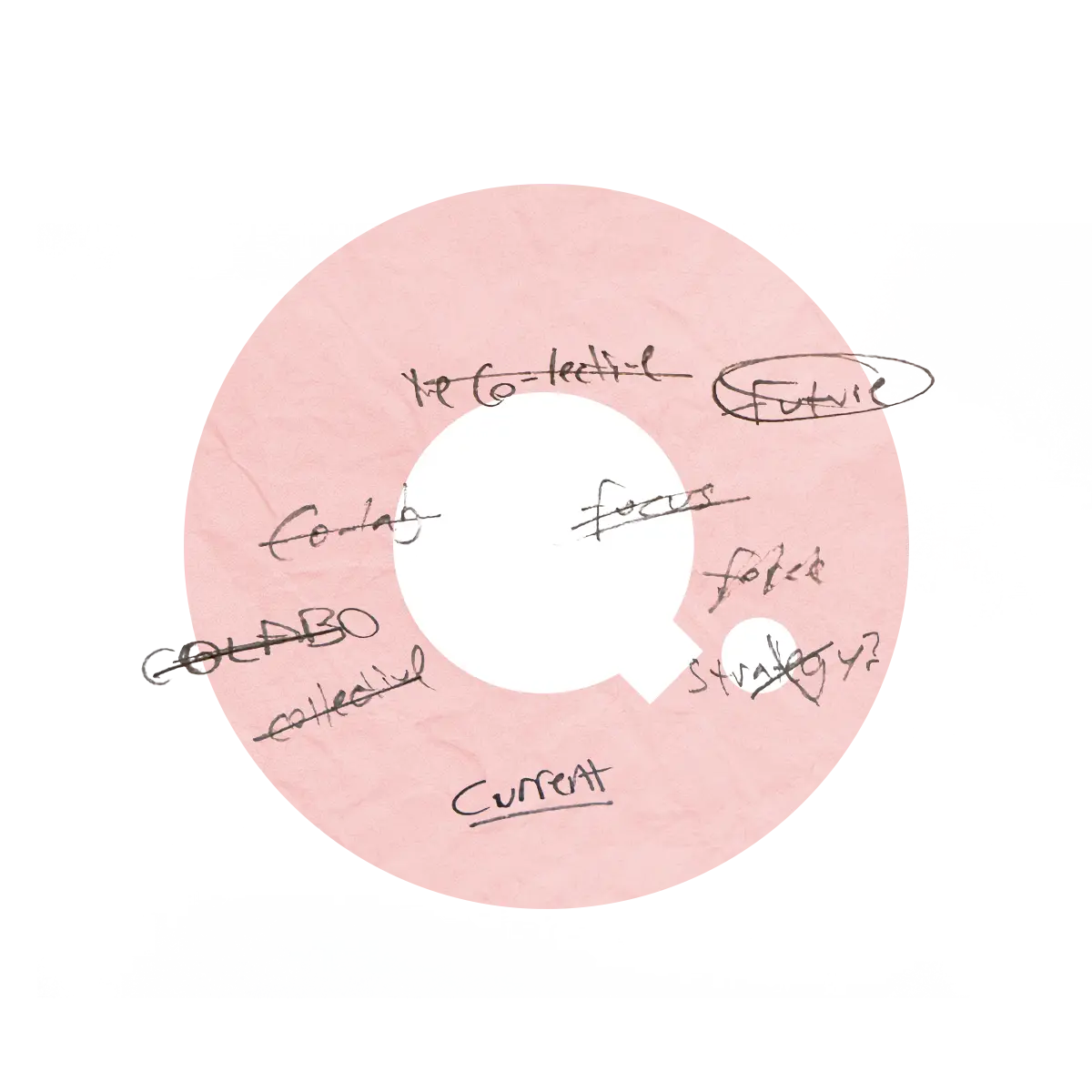
We were hired to build the brand. But the name the client arrived with, The Co-Lab Collective, was already leaking attention. So we pushed back, and it became Current Future.
 Words:
 When Current Future came to us, they weren’t asking for a name.
They already had one: The Co-Lab Collective.
It was the name they were already using. Email addresses had been set up around it. A URL had been planned: theco-laborative.com.au.
We’d been engaged to build out the brand and website. In many projects, that can make the name feel off-limits. The client has started using it, and the easiest thing to do is accept the name, make it look good and keep moving.
But names don’t only live inside the business.
They live in search bars, introductions, inboxes and calendar invites.
In investor conversations, referral messages and LinkedIn searches.
And in the moment someone says, “what was that company called again?”
That’s where The Co-Lab Collective started to wobble.
The planned URL made the problem clearer. It was long, and it asked people to hold too many similar ideas at once: co-lab, collaborative, collective. It also introduced a spelling problem before the brand had properly launched. Was there a hyphen, and was the domain the same as the name?
That’s a lot of friction for a new advisory brand.
So we pushed back, on the grounds of recall and the cost of every future introduction. And it was still early enough to do something about it.

Ownability starts before the logo
Ownability is often treated like a legal or trademark question.
It’s partly that. But in brand work, ownability is also practical: can people remember it, say it cleanly after hearing it once and search for it without fighting the category?
The Co-Lab Collective had intent, but it was built from words a lot of businesses already reach for. Each one points toward a similar world of workshops, innovation spaces and consultants.
That made the name feel familiar before the company had a chance to define it.
For a business selling serious operating support, familiarity wasn’t enough. Current Future needed to be remembered by founders, CEOs, investors and boards at moments when time matters, like preparing for sale or integrating after an acquisition.
A generic collaboration name could describe the team. It couldn’t convey the urgency.
The URL was the warning sign
URLs are sometimes where naming problems become hard to ignore.
The planned domain, theco-laborative.com.au, was doing too much work. It tried to make a crowded name available by bending the spelling. That matters more when email addresses and launch planning have already started, because every small workaround begins to look normal internally before it becomes friction in the market.
That’s usually a sign the name is asking the wrong question.
The question to ask: will people know what to type, remember and search?
Google’s own guidance on URL structure is plain: keep URLs simple, descriptive and understandable for people and search engines. Hyphens are fine inside readable URL paths, but a hyphenated workaround in the primary domain is different. If the domain has to explain the name, the name is already leaking attention.
Search is also a memory tool. Someone hears the name in a meeting and looks it up later, or types what they think they heard.
The cleaner the name, the easier those small moments become. The messier the name, the more the brand pays for attention it already earned.
The new name needed a point of view
We didn’t want a name that simply said “operators” or “advisors”. That would have been accurate, but flat.
The tension in the business was time. Current Future works with companies when the future has become urgent. A sale is approaching, or an acquisition needs integrating. The leadership team knows what the business could become, but the path from now to next isn’t clear enough yet.
That’s where the name Current Future came from.
It wasn’t an instant yes. That’s normal. The old name was already familiar inside the business, with email addresses attached and some momentum. Asking a client to change a name at that point is a big ask, so the new name had to earn its place.
Current Future did, because it holds two ideas together. Current is the business as it is now, constraints and all. Future is where the leadership team needs to get to, built in the present.
Current Future says the gap is the work.
It also gave the brand language a natural centre.
The Future Waits For No One.
The site backs that line with a promise the name had already prepared the ground for: “operating partners to call when tomorrow needs to be delivered today.” It works because the name set it up.
A name should make the next sentence easier
A good name earns the next sentence.
Current Future does that better than The Co-Lab Collective because it opens a better question: what does the future need from the business right now?
That question is broad enough to cover the offer, but specific enough to avoid sounding like a generic consultancy. It can speak to founders and private investors without changing personality, and it gives the identity a reason to be direct.
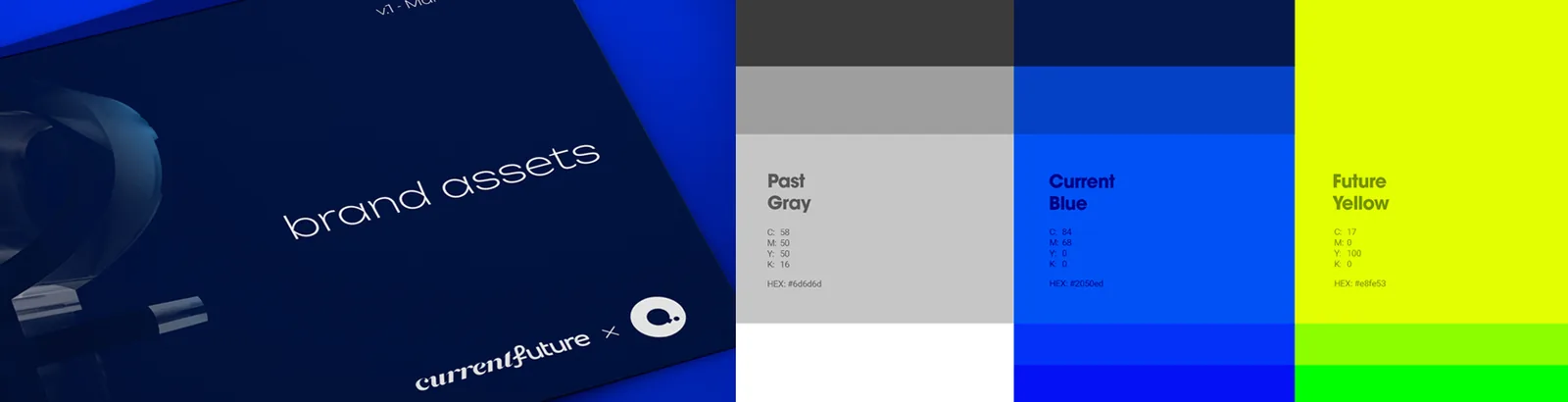
The mark and visual system followed that logic, with strong contrast, a sense of motion and type with enough presence to feel decisive.
The name gave the design something to push against.
Descriptive isn’t always clearer
The trap with naming is that descriptive names feel safer in early conversations.
Everyone can see the logic. Nobody has to defend much. The name points at the category and the operating model, so it seems responsible.
But overly descriptive names often become less clear in market. They blend into the words everyone else is using, and they sound fine in a deck and ordinary everywhere else.
The Co-Lab Collective described collaboration. Current Future describes the problem the client is paying to solve.
That difference matters.
Clients are rarely buying the internal shape of your team. They’re buying the outcome. In Current Future’s case, that means experienced operators who can step in when the next stage of the business can’t wait for a long consulting cycle.
The name had to point to the reason the collaboration exists.
Search follows clarity
SEO isn’t a magic naming test, but it’s a good reality check.
If a name is made from generic category language, the business has to compete with the category before it can even introduce itself. If the domain spelling doesn’t match the spoken name, people have to solve a puzzle before they arrive.
A clearer name reduces those problems.
Current Future is made from common words, but the pairing is distinctive, and it’s easier to say and type. The domain, currentfuture.co, matches the name cleanly enough that the brand doesn’t need to apologise for its own address.
That matters.
For a new business, clarity compounds. Every introduction, proposal and referral link reinforces the same phrase. The name becomes easier to retrieve because it keeps arriving in the same shape.
The best names remove small costs
Naming work can look like a big creative leap from the outside. Sometimes it is.
More often, it’s a series of small costs being removed before they become expensive: the spelling problem, the crowded search term, the apologetic URL.
Current Future worked because it removed those costs and gave the business a name with momentum. It turned a future-facing advisory model into something clients could understand quickly and remember later.
That was the point.
The name didn’t need to be clever. It needed to be useful.