


Q+A · No. 04 · Print
What are bleed, trim and safe area?
Print has a way of punishing vague decisions. Knowing where the cut falls fixes most of them before they happen.
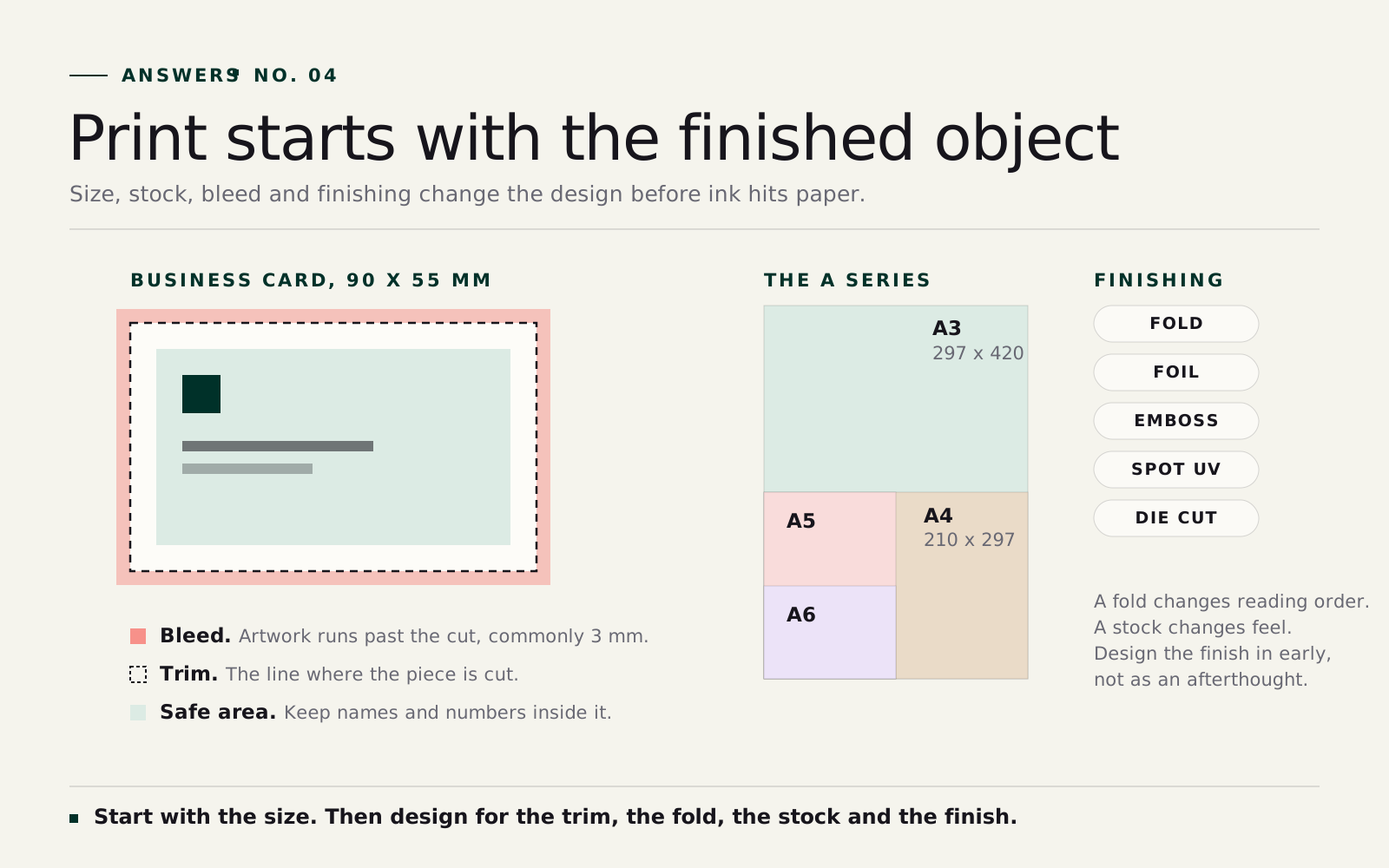
Trim is the line where the printed piece gets cut. Bleed is extra artwork that runs past that line (commonly 3mm in Australia) so a tiny cutting variation never leaves a white sliver at the edge. Safe area is the zone inside the trim where the important things live: names, numbers, logos, QR codes.
Get those three right, add the printer's own spec, and most print surprises disappear.
The longer answer
Start with the finished size
A4 is 210 x 297mm. A5 is half of that, A3 is double, and the A series folds neatly into itself, which is why it covers most everyday print. A business card in Australia is commonly 90 x 55mm. DL flyers and envelopes have their own logic, and packaging, signage and large format work step outside the tidy A series completely.
The correct size isn't the one that sounds familiar. It's the one that suits the job, the material and the way someone will hold, post, fold, file or display the finished piece.
Trim is the final edge
Trim is where the piece gets cut. That sounds obvious until a background colour or photograph runs to the edge. If the artwork stops exactly at the trim line, even a millimetre of cutting variation leaves a white sliver.
Bleed covers the cut
Bleed is extra artwork beyond the trim edge. The printer cuts through it, so colour and imagery reach the edge cleanly every time. Many Australian printers ask for 3mm on every edge, but the safest rule is simple: check the printer's specification before final export.
Safe area protects the important things
Bleed is for backgrounds. Safe area is for content. Keep names, phone numbers, legal lines, QR codes and fine detail a few millimetres inside the trim edge unless the design deliberately wants the risk. It's the difference between a card that feels composed and one where the phone number is breathing on the cut line.
Finishing isn't decoration
Finishing choices change how a piece behaves. A fold changes reading order. A heavy stock changes perceived value and postage weight. Foil catches light, embossing changes the surface, die cutting changes the silhouette, binding changes how a document opens.
Those choices shouldn't be left until the end. If the piece needs a fold, design the panels around it. If the stock is textured, think about how fine type will reproduce. Print is physical. That's the advantage.